What a Hill Country Home Inspection Should Include (New Braunfels and San Antonio)
What should a home inspection include in the Texas Hill Country?
A Hill Country home inspection near New Braunfels should cover foundation performance, drainage and slope, plus add-on septic, well water and wood-destroying insect inspections, since a standard TREC inspection doesn't require those.
Here's a mistake I see all the time. A buyer gets a standard home inspection on a gorgeous place outside New Braunfels, the report comes back clean, and everybody exhales. Then I ask, "Who's looking at the septic? Who's testing the well? Did anybody check for termites?" and the room gets real quiet.
A Texas home inspection is a great tool, but the state spells out exactly what the inspector has to look at, and some of the things that matter most out here are optional add-ons. After 19 years of selling homes and land from Gruene to Bulverde to Canyon Lake, this is what I want inspected before my buyers' option period runs out.
What a Standard Texas Home Inspection Covers
Home inspectors in Texas are licensed by the Texas Real Estate Commission, and they follow TREC's Standards of Practice. Those rules list what the inspector must report on, from the foundation and roof to plumbing, electrical and HVAC. They also list what the inspector doesn't have to do, and that second list is where Hill Country buyers get caught.
Under those standards, inspectors aren't required to inspect private sewage disposal systems or water wells unless they agree to as an optional system. They also aren't required to determine whether termites or other wood-destroying insects are present. So when you hire an inspector, ask exactly which add-ons they offer and which ones you'll need from a separate licensed pro.
Foundation on Limestone and Clay
Why the ground matters here
New Braunfels sits right where the Hill Country meets the Blackland Prairie, and you can feel it in the dirt. On the west side and out toward Canyon Lake and Spring Branch, a lot of homes sit on shallow limestone. Head east and you'll find more clay, which swells when it's wet and shrinks when it's dry. Both can be built on just fine, but they behave differently, and your inspector should know which one you're standing on.
What the inspector looks for
TREC's standards require the inspector to give an opinion on foundation performance and report signs of adverse performance. Think doors that stick or won't latch, cracks in brick or drywall, and sloping floors. If the inspector flags movement, I'll usually suggest bringing in a structural engineer during the option period so you know what you're really dealing with.
Drainage and Slope
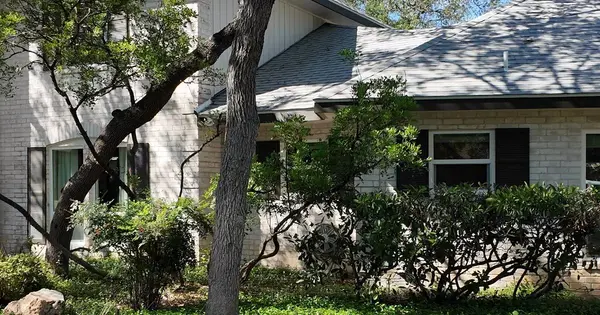
Out here, water and slope are everything. A pretty hillside lot can send every bit of rainwater straight toward the slab if the grading is wrong. TREC's standards require inspectors to report grading and drainage around the foundation that isn't performing, along with problems in gutters and downspouts. They aren't required to judge the hydrology of the whole area or anything buried, like underground drainage systems.
So I walk the lot myself, too. I look at which way the land falls, where the gutters dump, whether there's erosion near the foundation and how the driveway handles a heavy rain. If it's raining during the option period, we're going out there in boots, y'all.
Septic Inspection (the Short Version)
A lot of homes around New Braunfels, Bulverde and the rest of Comal County are on septic. In Texas, septic systems are called on-site sewage facilities, and they're permitted through TCEQ's local authorized agent for your county. You can find yours on the TCEQ septic page for homeowners.
If your home inspector agrees to inspect the septic, TREC's standards have them report the system type, where the drain or distribution field is, and nearby features like wells and property lines. They don't have to dig up the system or judge whether it's big enough. That's why I like a separate septic inspection from a licensed septic professional. My December post on septic systems goes into all the details.
Well and Water Testing (the Short Version)
If the home runs on a private well, TREC's standards say an inspector who agrees to look at it must run at least two fixtures at the same time and recommend or arrange coliform bacteria testing. They aren't required to judge how reliable the water source is. The Texas Water Development Board also points out that the state doesn't regulate private well water quality, so testing falls on the owner. My December post on well water vs city water covers the rest.
Wood-Destroying Insects
Termites love Texas as much as we do. A wood-destroying insect inspection is its own report, done by someone licensed through the Texas Department of Agriculture's Structural Pest Control Service. Texas rules require that inspection to be done by a certified applicator or technician licensed in the termite category, and TDA says the official Texas report form is the SPCS/T-5.
That inspector checks the visible, accessible areas in and on the house, including plumbing areas, door and window frames, baseboards, porches, the outside of the foundation and any crawl space. They report active insects, old damage, signs of past treatment and conditions that invite trouble, like wood touching the ground or extra moisture. Some lenders require this report, so ask yours early.
Rules can change, so check with TREC, TCEQ and the Texas Department of Agriculture for the current requirements.
Your Hill Country Inspection Checklist
- General home inspection by a TREC-licensed inspector
- Structural engineer if the inspector flags foundation movement
- Septic inspection by a licensed septic professional
- Well inspection and water testing, including coliform bacteria
- Wood-destroying insect report (SPCS/T-5)
- Your own walk of the lot for drainage and slope
FAQ
Does a Texas home inspection include septic and well?
Not automatically. TREC's Standards of Practice treat private sewage disposal systems and private water wells as optional systems, so the inspector only checks them if they agree to. Ask before you book.
Does a home inspector check for termites in Texas?
A general home inspector isn't required to determine whether wood-destroying insects are present. That's a separate wood-destroying insect report done by someone licensed through the Texas Department of Agriculture.
How long do I have to get inspections done in Texas?
Most buyers schedule inspections during the option period they negotiated in the contract. Book every inspector the day your contract is signed so nothing runs past the deadline.
Let's Get It Inspected Right
I'd much rather find the problem before you own it. If you're buying a home or acreage in New Braunfels, Comal County or anywhere north of San Antonio, call me at 210-707-9029 and I'll help you line up every inspection the property actually needs. You can also browse Hill Country homes anytime at vhbhomes.com.
As always, I hope to see y'all around town.
Vanessa H. Bradford
REALTOR® | Coldwell Banker D'Ann Harper, REALTORS®
Hill Country Queen | VHB Homes
210-707-9029 | vhbhomes.com
Categories
Recent Posts



GET MORE INFORMATION